MENU
There has never been a better time to start a podcast than the present, as more and more people are listening to podcasts than ever before. Podcasts are soaring in popularity, as the tech is easier to get and there is still a lot of opportunities available for podcasters in the market.
The popularity of podcasts keeps on increasing, since the last four years, Americans listening to a podcast each week have increased about 120%. An average of 90 million people in the US listen to a podcast every month. With people getting more familiar with podcasts, the audience keeps on increasing because there has never been a better way to promote a business, brand, or hobby.
This article is a step-by-step guide to starting your podcast. Follow this guide to avail advantage of this amazing medium.
A podcast is a great way to build a genuine connection with your audience. A podcast can be either audio-based or video-based, depending on the format you choose. Podcasts engage the audience through long-form content that is a more convenient way of communicating with people. People can listen to podcasts at any time and anywhere, such as while, driving, exercising, or doing chores.
There are unexpected opportunities for podcasting available, as there are roughly 23 million YouTube channels, 600 million blogs but only 800,000 podcasts available on the Apple podcasts. Hence, there is an unexplored marketplace that can help speed your word.
Now that you have a clear idea of where podcasting stands today, here are the steps to start your podcast,
Before we encounter questions like choosing the right name for the podcast, selecting the format and length of the show, it’s essential to answer some of the fundamental questions. The first question that you need to answer would be “Why am I starting a podcast” Once you know the purpose of your podcast, choosing the format and name would be easier.
The next question that you need to answer is “What your podcast is about?” By the time you are able to answer both of these questions everything else will start to fall into place automatically. To help you answer the first “why” question, here are some common purposes to start a podcast.
Picking out the right purpose will help develop the concept for your podcast.
The next course of action would be to select your podcast topic. The topic for your podcast can be as broad as sports or can be as focused as talking about recent supreme court rulings.
The only requirement that you need for selecting the right topic for your podcast is that you should be passionate about your topic. Once you have finalized the topic, it’s now time for extensive market research.
Market research is easy, as you can search your show’s topic on Apple Podcast to know if your podcast already exists in that genre. You can see from a handful of episodes to see what others are doing right and how you can improve it.
Before picking out a name for your podcast, make sure that the name is catchy, memorable and will rank with relevant keywords. You need to ensure that the name is easy for people to find, but with that, you also have to avoid keyword stuffing.
Using your name in the name of your podcast is a great idea. if you are using a one or two-worded name, the right use of description is necessary. For instance, if your show’s name is “Akimbo: A Podcast from Seth Godin” people are most likely to search for Seth Godin. Thus you must use your name in the title. The name can not only tell who it’s from but also can indicate the purpose.
There are many formats to follow when starting your podcast. Some podcasts have a single host, while others are scripted stories and some even feature in-depth interviews. It is important to choose a format that fits the purpose of your podcast and with what you are comfortable with. For instance, if you are like when things are planned and scripted, your best option would be to go for an audio drama. However, if you like improv and banter, getting a cohost would be best for you.
Although there’s no right answer for choosing a format, here are some of the common formats for a podcast.
Most people have their opinions as to how long should a podcast be, but don’t let anyone tell you that there is an optimal length for a podcast episode. Your podcast can be as long as it needs to be, as there are podcasts that are 20-30 minutes long, while some are as long as audiobooks. Hence, there is no dedicated limit to the length.
You can always benefit from editing, as you can cut out boring segments and parts that do not add value or appeal to the audience.
You can be a podcaster full time or it can be a side hobby. If you are going for a latter, your publishing schedule would be more relaxed. There are podcasts such as The Daily that are published every day. Whereas, some like Serial are podcast series that is published twice a year.
If you can, it would be best if you schedule publishing a podcast at least once a week because it would maintain a connection with your audience. This is a great way to create a habit for yourself, as it helps in building continuity to grow your show.
Once you are done with creating the concept of your podcast and decide on the scheduling and length of episodes, you are now all set to invest in the equipment. Podcasts have a low barrier to entry, as it is relatively easier to start a podcast with minimum overheads and experience
For some people, the content is the only thing that matters in a podcast and the video quality or sound quality is not that important but that’s not the case. If you have a video-based podcast your content video quality and sound quality are equally important. As far as an audio podcast is concerned, you should have superior content and quality sound for providing the best experience.
Picking out the right equipment for your podcast can be a complex task, especially if you don’t know anything about audio and video recording. Nevertheless, selecting the right equipment varies from the type of podcast you are starting. Here is a list of equipment that would be best for you.
If you are looking to start a podcast with minimal investment the above-mentioned equipment is all that you need. As for the furniture you can get a few sofas or chairs depending on how many individuals will be involved and a small table, the rest of the decoration is on you.
Now that you got all the required equipment to start the podcast, you would also need some software to edit and adjust your podcast to get the best sound quality and content in order. Even though you might find some editing software on your phone but they don’t offer the same features for sound editing. Don’t worry because editing software is surprisingly affordable.
No one wants you to hear you rambling in a podcast and is one of the biggest mistakes that new podcasters make. Therefore, the best way to avoid doing so is by writing an outline for your podcast. You don’t have to write the whole script but taking 20 minutes to write down bullet points will improve the entire flow of your episode dramatically.
If you are working alongside a cohost, you can share the outline so that you can both be on the same page and eliminate the chances of your conversation going down the rabbit hole.
There are a few necessary skills to start a podcast that you must have in your arsenal. The primary skills that you should have are your communication skills. You must be capable of building listener engagement and getting the attention of people, It’s a basic requirement to start a podcast that you should be able to listen with empathy and address the audience.
Another skill that you need to master is the art of time management and flexibility so that you can start and end at the right time. The final skill that you should have are technical and editing skills to be able to record and edit your podcast.
Now, this is the phase where you get rid of audible distractions, insert voiceover, prerecorded advertisement, intros, and outros. Editing isn’t a complex task because, with the help of the right software and a few pointers, even not-so-technical people can create a well-edited podcast.
The need for a good intro is crucial, as it creates engagement and improves the listening experience. The entire purpose of editing is to remove any mumbling, distortions, and other distractions that lose listener engagement. Make sure that the quality of your recorded podcast is up to the mark.
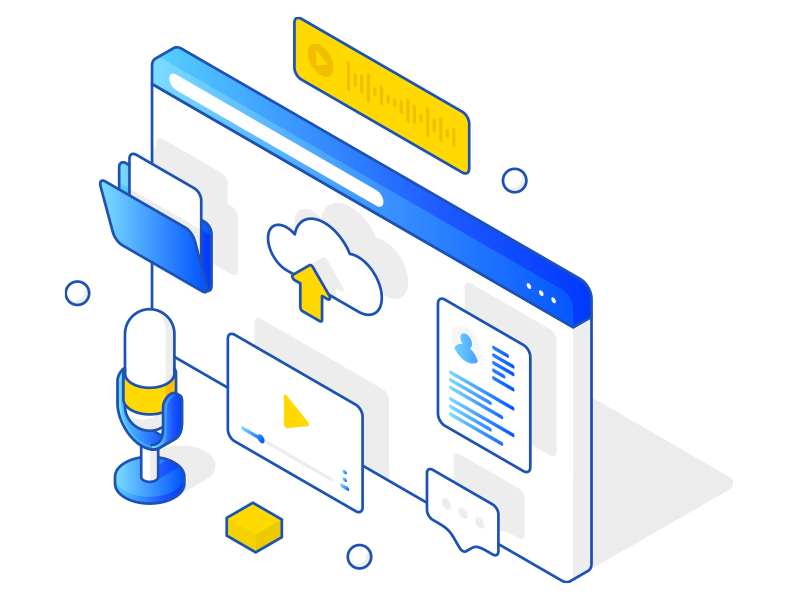
Hosting your podcast is a crucial requirement for success, as you need to list your podcast in the top directories where more and more people can find it. Top directories such as Apple Podcasts are centralized places where listeners can find new shows.
There are many hosting platforms that you can use for your podcast, as there are the top-ranked hosting platforms such as Apple Podcasts, Spotify, and Google Podcasts. At the same time, there are others that fall in the middle ranks and even though there are not many podcasts listeners in the middle rated platforms, it’s still a great way to build awareness. Other podcast hosting platforms include Stitcher, Pandora, TuneIn, and iHeartRadio. Top-ranked podcast platforms appeal to 95% of the listeners and other podcasting platforms reach the remaining 5% audience, so if you are a beginner, your best option would be to upload your podcast on top platforms first.
Getting listed in the top directories is an essential part of marketing your podcast because a majority of listeners will look for your podcast in the top directories.
Podcasting is an unexplored market that has opportunities overflowing. Starting a podcast is a simple venture to promote your business or fulfill your hobby that can be started with limited expenditures. Most people are unaware of how they can start a successful podcast and this complete guide will help you start your podcast. So this is the perfect time to avail this opportunity before the window closes.